


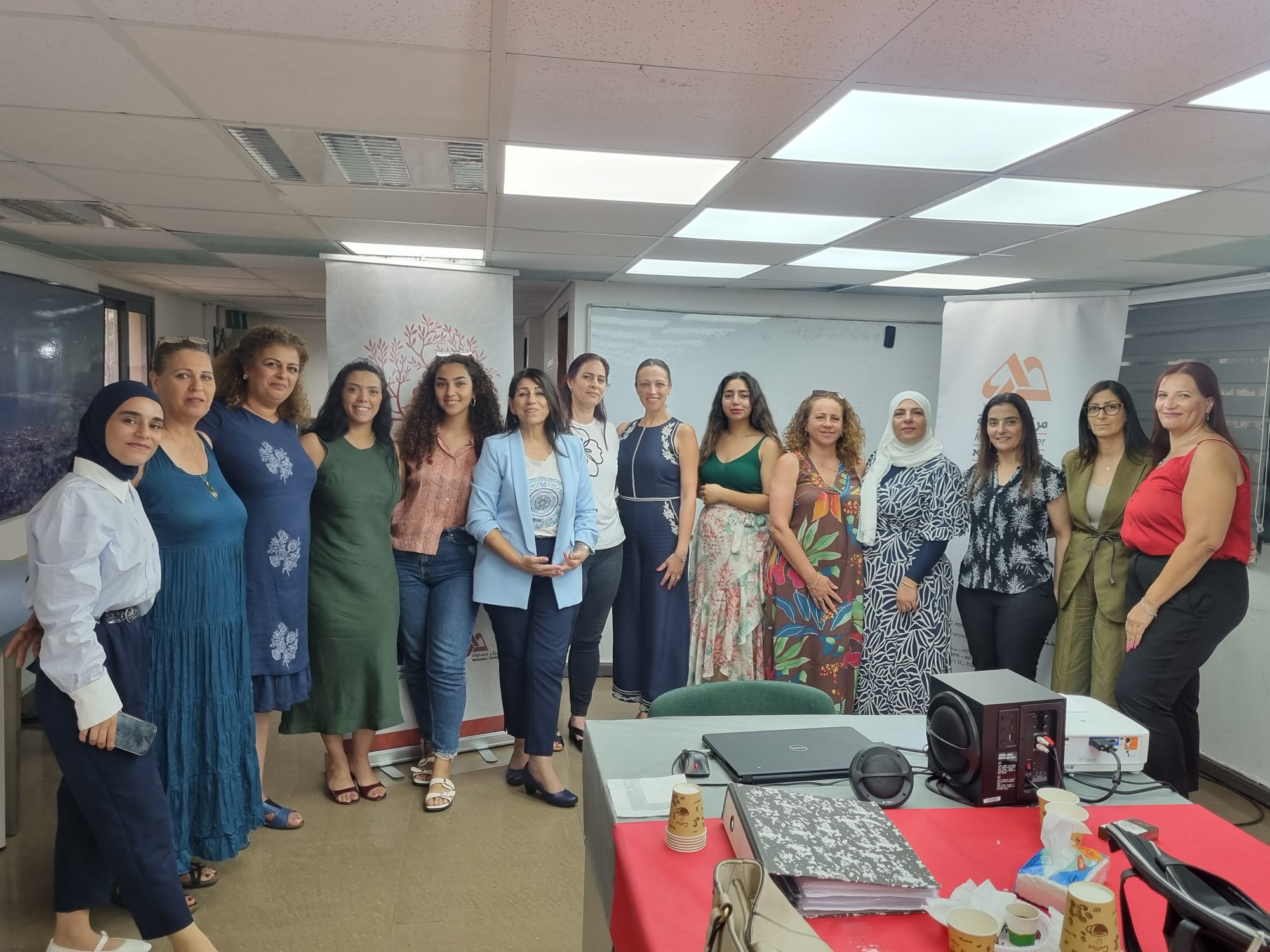
On Friday, August 1, 2025, the Mossawa Center hosted the fourth meeting of the Aspiring Arab Women’s Network as part of its project aimed at promoting women’s participation in decision-making spaces. The meeting, held in Haifa, focused on the exclusion of Arab women’s needs from the Israeli state budget and related government decisions affecting Arab society.
The workshop was led by Mossawa Center Director Jafar Farah and Parliamentary and Legal Advocacy Coordinator Nibal Abu Ardat. They presented an overview of the mechanisms behind the formulation of the state budget by various ministries, particularly the Ministry of Finance, and examined how government decisions are shaped and implemented.
The meeting began with opening remarks from Project Coordinator Dr. Rawda Marcus Makhoul. She provided an update on the network’s ongoing activities and highlighted upcoming milestones within the broader project framework.
The central theme of the workshop was: “The State Budget, its Hidden Layers, and the Impact of its Allocation on Arab Local Authorities and the Needs of Arab Women.”
Farah delivered an in-depth analysis of the structure of the state budget, highlighting discriminatory practices in budget allocation for Arab communities and identifying opportunities to influence budgetary decisions.
Participants discussed the lack of proper assessment by government ministries regarding the specific needs of Arab women during the formulation of the state budget and related policies. Key issues raised included:
The urgent need for safe and accessible public transportation for working women and students in all Arab towns
Closing gaps in healthcare services tailored to women’s needs
Creating employment opportunities near Arab communities
Providing early childhood education frameworks for working mothers
Building safe, community-based sports facilities for women
Establishing support services for survivors of gender-based violence
Nibal Abu Ardat presented legal and parliamentary tools for monitoring budget implementation, emphasizing the importance of professional and community-based oversight. She highlighted the Advocacy Unit’s ongoing efforts to track budget allocations, challenge discriminatory practices through legal petitions, and hold government ministries accountable.
Abu Ardat also stressed the importance of integrating the demands of Arab women into broader community demands presented by Arab local authorities, political parties, and civil society organizations, ensuring women’s needs are not sidelined.
The event featured a vibrant interactive discussion, during which participants shared personal experiences and highlighted successful grassroots initiatives led by women in municipal and community contexts.
The day concluded with a hands-on workshop facilitated by Dr. Rawda Marcus Makhoul and Mossawa Center Executive Director Suha Salman Mousa. Participants explored ways to turn knowledge into action by developing new local initiatives based on community organizing models. The network also began drafting a policy change paper, which will be submitted to a Knesset committee during the winter session following the current recess. Members discussed strategies for gathering field data through active engagement with their hometowns and community groups.
The meeting ended with a joint reflection session, reaffirming the urgent need to empower Arab women in positions of influence and to strengthen their professional and advocacy tools to hold the state accountable and promote equitable distribution of public resources.
The Aspiring ArabWomen decision making is aligned with the ‘’Aspiring Women’’ and “Arab Women Local Council members.”
