


In recent times, the Arab community has witnessed a worrying escalation in repressive policies and discriminatory measures, alongside its public opposition to the war declared by Israel and the United States. These policies include arbitrary arrests, systematic incitement, and restrictions on freedom of the press. They also reflect the continued deliberate neglect in protecting civilians, alongside reductions in government resources allocated to closing gaps in infrastructure and services provided to Arab citizens by the government.
First: Arbitrary Arrests and Use of Force
Israeli police carried out a wide campaign of arrests and prosecutions against Arab citizens on political and symbolic grounds, under circumstances that raise serious doubts about their legality. These actions were accompanied by inflammatory media leaks and the physical presence of the Minister of National Security, Itamar Ben-Gvir, during some of the arrests. Police and prison authorities also physically assaulted detainees. Documented cases include:
• The arrest of the artist and writer Majd Asadi, who was transferred to Megiddo security prison and assaulted. The Public Prosecution later determined that there was no legal basis for filing an indictment against him, and he was released by court order. He was subjected to physical and psychological assault before the court ordered his release.
• The arrest of a woman from Kafr Qara on the grounds that a Palestinian flag was found inside her home; she was later released by the court.
• The arrest of Muhammad Akram Saqallah, accused of drawing the Palestinian flag on the wall of the municipal building. The arrest operation was accompanied by the Minister of National Security. He was later released by the District Court.
• The use of violence against family members during the arrest of one of their relatives in Lod. He was released after investigation by the General Security Service.
• The suppression of an anti-war demonstration in Tel Aviv, which included physical assault and humiliating searches following arrest, before one of the protesters was released.
This sample reflects a pattern of law enforcement aimed more at the political repression of positions opposing the government than at the balanced application of the law.
Second: Systematic Failure to Protect Arab Civilians
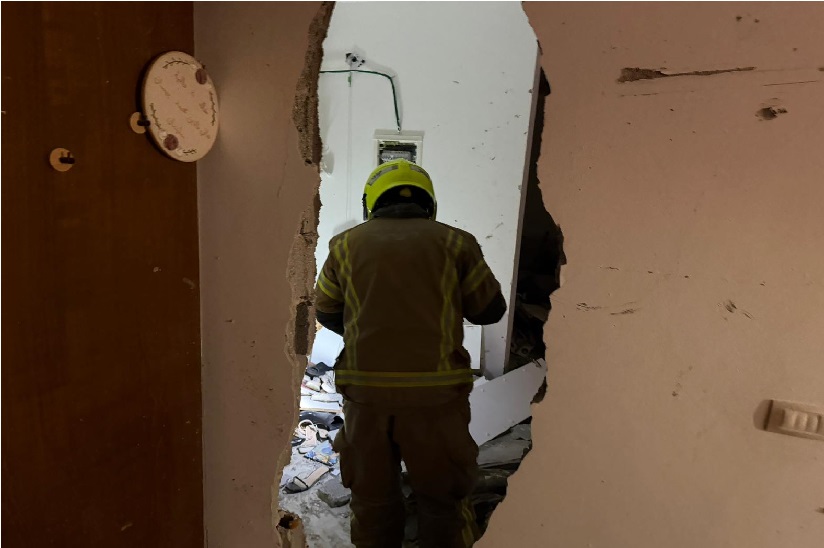
Despite decades of repeated security risks faced by civilian residents, Israeli governments continue to neglect their duty to provide protective infrastructure in Arab towns. Official data indicate a sharp gap in the distribution of shelters:
• Israeli governments have established more than 11,377 shelters nationwide, only 37 of which are located in Arab localities.
• Municipal discrimination in mixed and historic cities contributes to a severe shortage of protection infrastructure in Arab neighborhoods in cities such as Haifa, Jaffa, Lod, Ramla, and Acre. Due to planning constraints, constructing protected rooms in historic neighborhoods is more complex, time-consuming, and costly compared to Jewish neighborhoods.
• In the Wadi Nisnas neighborhood in Haifa, home to around 9,000 residents, protection is limited to a single school shelter and parking areas belonging to churches. Municipalities and government institutions have not initiated additional shelter construction in historic neighborhoods, despite the availability of spaces in community institutions and schools that could be adapted.
• The lack of shelters for approximately 15,000 Arab residents in the city of Lod.
• More than 150,000 Arab citizens suffer from the absence of protection in unrecognized Bedouin villages in the Negev.
This situation represents a clear violation of the principle of equality in the right to protection and personal security.
Third: Systematic Incitement and Lack of Legal Accountability
Since the outbreak of the war, incitement campaigns against the Arab community and its leadership have escalated through major media outlets and social media platforms. Some Arab journalists have been subjected to incitement campaigns that reached their homes and included threats related to their workplaces. Despite the legal powers granted to the Public Prosecution to combat incitement crimes, law-enforcement institutions have failed to conduct serious investigations or implement deterrent measures. This reinforces a climate of impunity and contributes to the spread of racist incitement in the public sphere and in workplaces.
Fourth: Restrictions on Freedom of Journalistic Work
Within a broader pattern of pursuing journalists and media outlets over the past two years, the Haifa Municipality imposed direct restrictions on Arab journalists and prevented them from filming in the Mount Carmel area, despite their possession of official permits from the relevant security authorities. Human rights and media organizations intervened to demand an end to these practices, which harm press freedom and equal professional opportunities. It should be noted that the actions taken by the Haifa Municipality are not within its legal authority; some municipal inspectors reportedly stood in front of cameras to prevent filming and threatened journalists.
Fifth: Reduction of Resources Allocated to the Arab Community
The government has taken steps to reduce budgets intended to narrow social and economic gaps by the end of 2025, and imposed additional restrictions on the continuation of gap-reduction programs during 2026, despite the fact that the state budget has not yet been formally approved. This trend threatens to deepen disparities in education, health, culture, environment, infrastructure, housing, and employment.
The government also decided to shift education to online learning via Zoom, which requires computers and adequate internet infrastructure. Many families living below the poverty line cannot afford to purchase computers for their children. In addition, there is a gap in the availability of internet networks in many Arab localities, as companies such as Bezeq and HOT have not deployed high-speed internet infrastructure across all Arab towns.
Sixth: Marginalization of the Arab Voice from Public Discourse
Israeli media outlets systematically exclude the positions of Arab leadership. Since 7 October 2023, they have excluded representatives of the Arab public who oppose the war in Lebanon, Iran, and the region, while preferring analysts who promote exclusionary or orientalist narratives and ignoring Arab experts specializing in Middle Eastern affairs. This distorts the public representation of the Arab community and excludes its voice from political discussions about the justification of the war and the future of the region.
Conclusion
Taken together, these findings depict a reality characterized by tightened security control, widening protection gaps, escalating incitement, and declining civil guarantees, in a context perceived as direct targeting of the Arab community during wartime. This reality calls for an urgent review of current policies and the assurance of respect for the principles of equality, the rule of law, and the protection of fundamental rights for all citizens without exception.
