


During the first two weeks following the outbreak of war on Iran, the Mossawa Center has monitored a concerning deterioration in the civil and human rights conditions of the Arab Palestinian community in Israel.
The current wartime environment has been accompanied by a series of measures and developments that raise serious concerns regarding equality before the law, protection of civilians, freedom of expression, and access to essential public resources.
The Arab community in Israel has been particularly affected by a combination of heightened security measures, discriminatory enforcement practices, escalating incitement, and structural gaps in civilian protection. These developments have taken place alongside the public expression of opposition within the Arab community to the war and its regional implications.
The findings presented below highlight several key trends documented by Mossawa Center during the first two weeks of the war.
1. Arbitrary Arrests and Excessive Use of Force
Israeli police conducted a wide campaign of arrests targeting Arab citizens on political and symbolic grounds under circumstances that raise significant questions regarding proportionality and legality.
In several cases, arrests were accompanied by public inflammatory statements and media leaks. The presence of the Minister of National Security, Itamar Ben-Gvir, during certain arrest operations further politicized law-enforcement actions.
Additionally, reports indicate that detainees were subjected to physical and psychological abuse during detention.
Documented cases include:
• The arrest of artist and writer Majd Asadi, who was transferred to Megiddo security prison where he was reportedly assaulted. The Public Prosecution later determined that
there was no legal basis for filing an indictment. He was released by court order after being subjected to both physical and psychological abuse.
• The arrest of a woman from Kafr Qara town in the triangle area, based solely on the discovery of a Palestinian flag inside her home. She was subsequently released by court order.
• The arrest of Muhammad Akram Saqallah from Lod, accused of drawing a Palestinian flag on a municipal building wall. The arrest operation was personally attended by the Minister of National Security. He was later released by the District Court.
• Use of force against family members during an arrest operation in Lod. The detainee was later released following investigation by the General Security Service.
• Suppression of an anti-war protest in Tel Aviv, during which protesters were subjected to physical violence and humiliating searches before release.
Taken together, these incidents reflect a pattern in which law enforcement appears to be used to suppress political expression and dissent rather than to ensure balanced and impartial application of the law.
2. Systematic Failure to Protect Arab Civilians
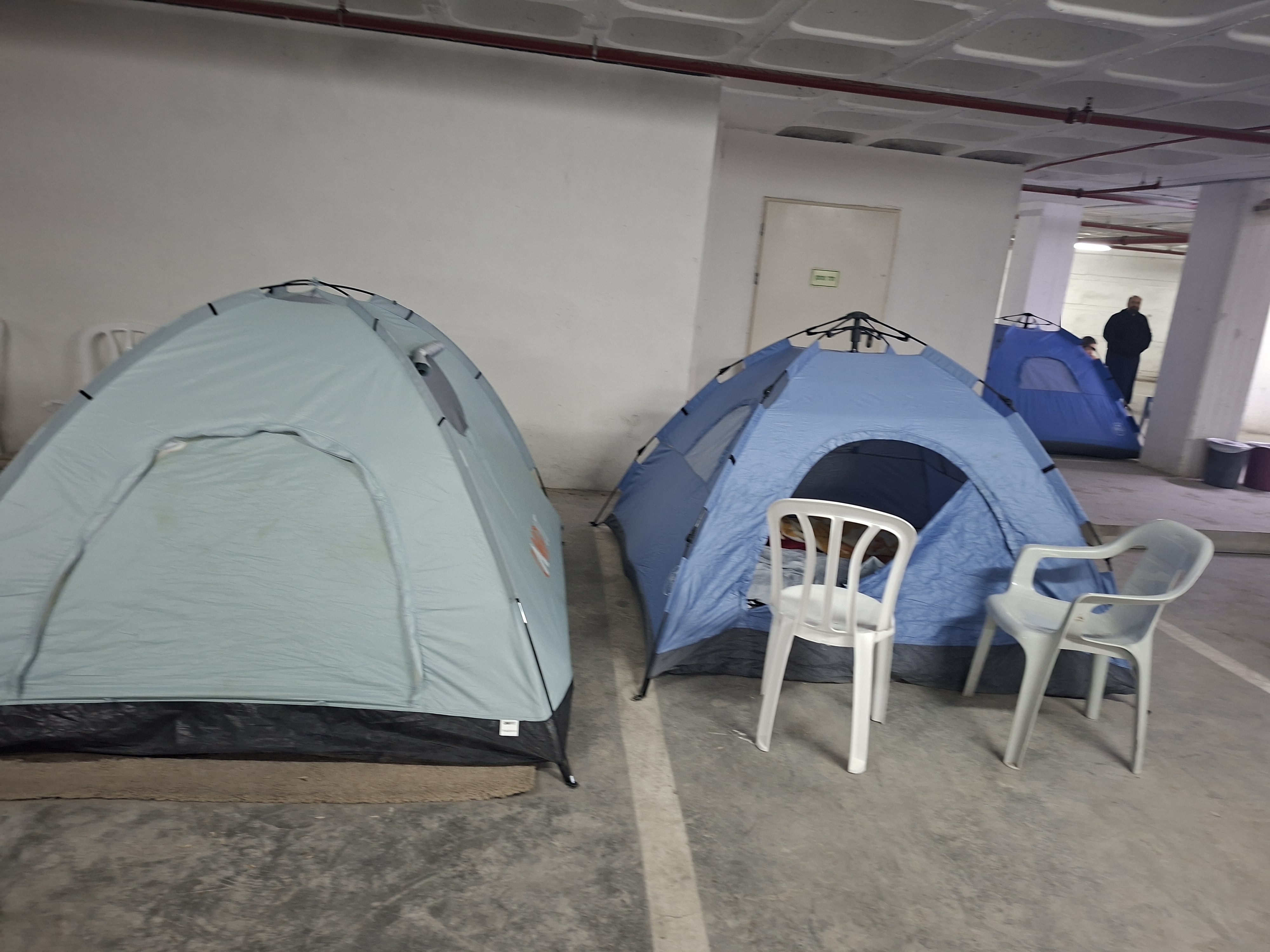
Despite longstanding security risks affecting civilian populations, the Arab community in Israel continue to suffer from severe gaps in protection infrastructure, particularly in access to public shelters.
Official data reveal stark disparities:
• Out of 11,377 public shelters across Israel, only 37 are located in Arab towns.
• Historic and mixed cities including Haifa, Jaffa, Lod, Ramla, and Acre suffer from severe shortages of protection infrastructure in Arab neighborhoods.
• In the Wadi Nisnas neighborhood of Haifa, home to approximately 9,000 residents, protection is limited to a single school shelter and church parking facilities. Despite the presence of schools and community buildings that could be adapted for civilian protection, municipalities and government authorities have not initiated additional shelter construction.
• In Lod, approximately 15,000 Arab residents lack access to adequate shelters.
• In the Negev (Naqab), more than 150,000 Arab Bedouin citizens living in unrecognized villages lack any formal protection infrastructure.
These gaps constitute a significant inequality in the right to protection and raise serious concerns regarding the state's obligations toward all civilians during wartime.
3. Escalating Incitement and Lack of Legal Accountability
Since the outbreak of the war, incitement against Arab citizens and their leadership has intensified across Israeli media and social media platforms.
Arab journalists and public figures have been targeted in coordinated incitement campaigns that included threats directed toward their workplaces and residences.
Despite the existence of legal mechanisms to address incitement and hate speech, law-enforcement authorities have not initiated significant investigations or enforcement actions.
The absence of accountability contributes to a climate of impunity and facilitates the spread of racist discourse within public institutions and workplaces.
4. Restrictions on Freedom of the Press
Arab journalists have faced additional restrictions while carrying out their professional duties.
The Haifa Municipality imposed direct limitations on journalists attempting to film in the Mount Carmel area, despite their possession of valid permits issued by relevant national security authorities.
Reports indicate that municipal inspectors physically obstructed filming by standing in front of cameras and threatening journalists.
Human rights and press freedom organizations intervened to demand an end to these practices, noting that municipalities do not possess legal authority to restrict journalistic activity in this manner.
These actions represent a concerning infringement on press freedom and equal professional access.
5. Reduction in Resources Allocated to the Arab Community
At the same time that wartime conditions increase the need for public support, government policies have moved in the opposite direction.
Budget reductions and restrictions have been imposed on programs intended to reduce long-standing socioeconomic gaps between Arab and Jewish citizens.
By the end of 2025 and into 2026, these measures have already affected programs in:
• Education
• infrastructure
• health
• housing
• employment
• cultural and environmental services
In addition, the shift to online learning through Zoom requires access to computers and reliable internet infrastructure. Many Arab families living below the poverty line cannot afford computers, and high-speed internet networks have not been fully deployed in numerous Arab localities due to infrastructure gaps involving major telecommunications providers.
These developments risk further widening structural inequalities.
6. Marginalization of Arab Voices in Public Discourse
Since October 7, 2023, Israeli mainstream media has significantly reduced the presence of Arab political leadership and experts in public discussions regarding regional developments.
During the current war, Arab representatives opposing the war have largely been excluded from television panels and political discussions.
Instead, media outlets frequently rely on analysts who promote exclusionary narratives while overlooking Arab scholars and experts specializing in Middle Eastern affairs.
This pattern distorts the representation of the Arab community in public debate and limits democratic pluralism.
Conclusion
The findings documented during the first two weeks of the war point to a troubling convergence of developments affecting the Arab community in Israel:
• expanded security enforcement
• gaps in civilian protection
• escalating incitement
• restrictions on civil liberties
• shrinking socioeconomic support systems
Taken together, these trends raise serious concerns regarding equality before the law and the protection of fundamental rights during wartime.
The Mossawa Center calls on Israeli authorities to take immediate steps to ensure the protection of the rights and safety of all citizens during the current wartime environment, including:
• ensure equal protection for all civilians
• guarantee freedom of expression and press freedom
• investigate incidents of incitement and abuse
• halt discriminatory enforcement practices
• maintain programs aimed at reducing structural inequalities
In light of the developments outlined in this report, the Mossawa Center calls on the international community to closely monitor the situation of the Arab Palestinian community in Israel during the current wartime environment. International partners are encouraged to engage with Israeli authorities to ensure the protection of fundamental rights, equality before the law, and equal access to civilian protection and public services for all citizens.
The Mossawa Center will continue to monitor developments and publish further findings as the situation unfolds.
