


Leadership is not measured by positions but is built through daily work, perseverance and genuine commitment to the issues of society.
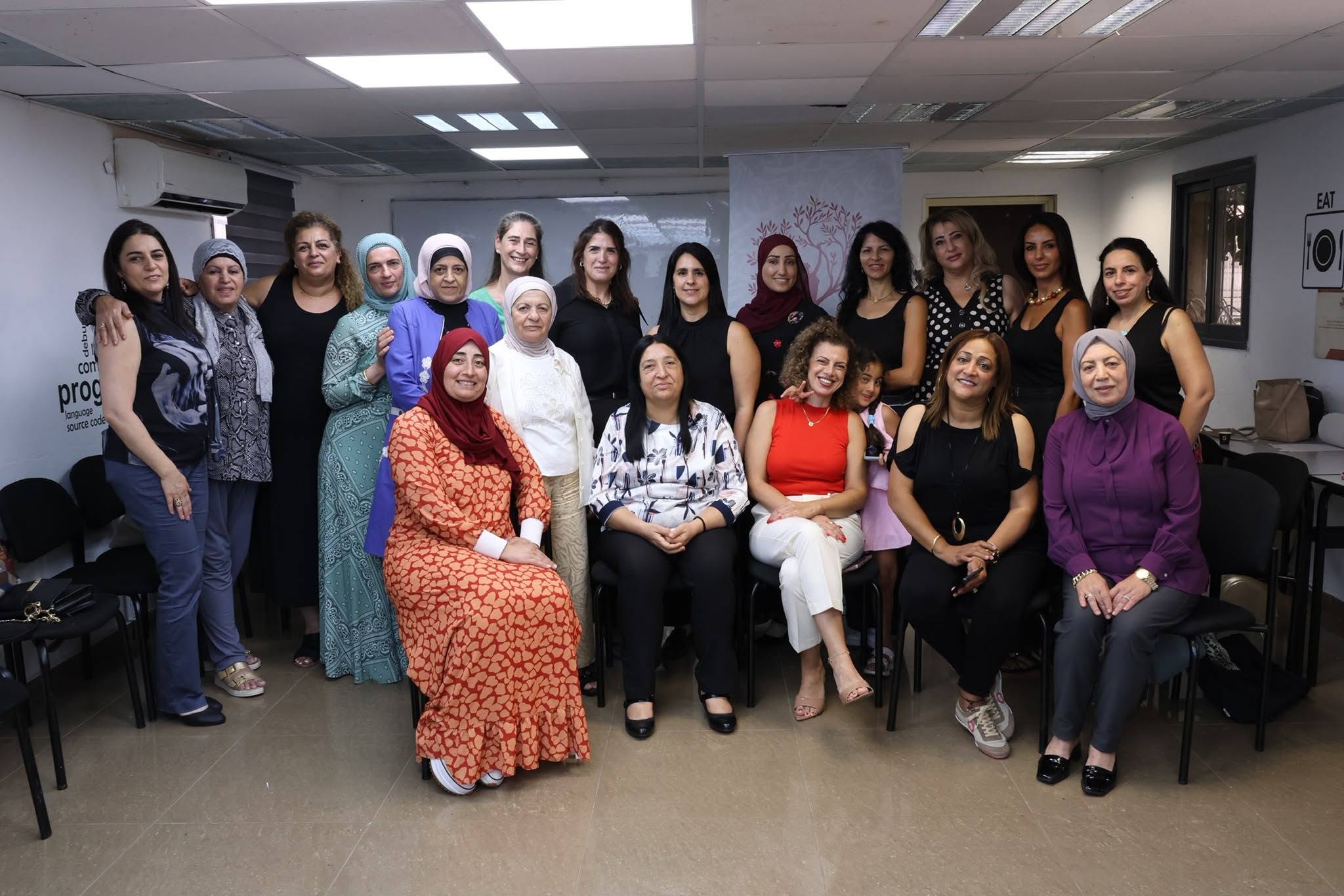
The “Arab Women Leaders Network” hosted Dr. Nuha Bader a former member of the Maghar Local Council who holds a PhD and postdoctoral degree in Education from the University of Haifa, along with extensive experience in academic administrative and municipal leadership. She shared with participants her journey in leadership and public service within local authorities.
The session was opened by Attorney Lama Nashashibi Khoury, the project coordinator at the Mossawa Center for Equality who emphasized that the project does not only aim to encourage women to run in elections but to build leaders equipped with knowledge, tools and self-confidence—capable of influencing public discourse and transforming community initiatives into institutional and political action that brings about real change.
Also participating in the meeting was Judith Stelmach, Manager of Projects Relations at the Friedrich Ebert Foundation who highlighted the importance of investing in women’s leadership stressing that strengthening women’s participation in political life is reflected in public policy and contributes to building more just and equal partnerships within society.
In her lecture, Dr. Bader reflected on her leadership journey affirming that leadership is not measured by positions but is built through daily work, perseverance and genuine commitment to societal issues. She explained that family support, volunteer work, and community initiatives formed the foundation that enabled her to earn people’s trust before entering municipal politics.
She added that a significant part of her leadership framework was inspired by the late leader Tawfiq Ziad, who embodied the values of working for the people commitment to national and social causes and building relationships based on trust and credibility with the public.
Dr. Bader emphasized that psychological resilience and self-confidence are among the most important pillars of leadership, noting that women in public life face continuous challenges and pressures, which require a strong personality, a clear identity, and steadfast adherence to values and principles.
She stressed that Palestinian identity has been, and will remain, a core part of her vision and public work, alongside her commitment to serving her community and defending its rights and causes. She affirmed that a leader needs clarity of identity and position just as much as professional competence.
She further explained that academic degrees, while important, are not sufficient on their own. She called on women to develop practical skills and gain knowledge in areas such as law, budget analysis, and the functioning of local authorities, considering these essential tools for any woman seeking real influence in decision-making spaces.
Dr. Bader also addressed the importance of initiative, persuasion, and the courage to challenge reality when the goal is to serve society, rejecting nepotism and politics based on personal interests, and affirming that the public good must remain the guiding compass for any leader.
She spoke about her experience in the local council, where she was the only woman among thirteen male members, a challenge through which she proved that effective presence is built on competence and achievement, not mere representation.
During the discussion, one participant asked how to distinguish between parties that genuinely support qualified women and those that seek only to fulfill formal female representation quotas. Dr. Bader responded that every woman considering candidacy should first ask about her position on the list and whether it provides a real opportunity for access and influence, emphasizing that political participation must be based on genuine partnership, not symbolic representation.
This meeting is part of the “Arab Women Leaders Network” program led by the Muwatin Center for Equality, aimed at networking and training Arab women leaders, strengthening women’s presence in local authorities and the political sphere, and providing practical tools that enable them to move from community work to active participation in decision-making at both the local and national levels.
