


* *
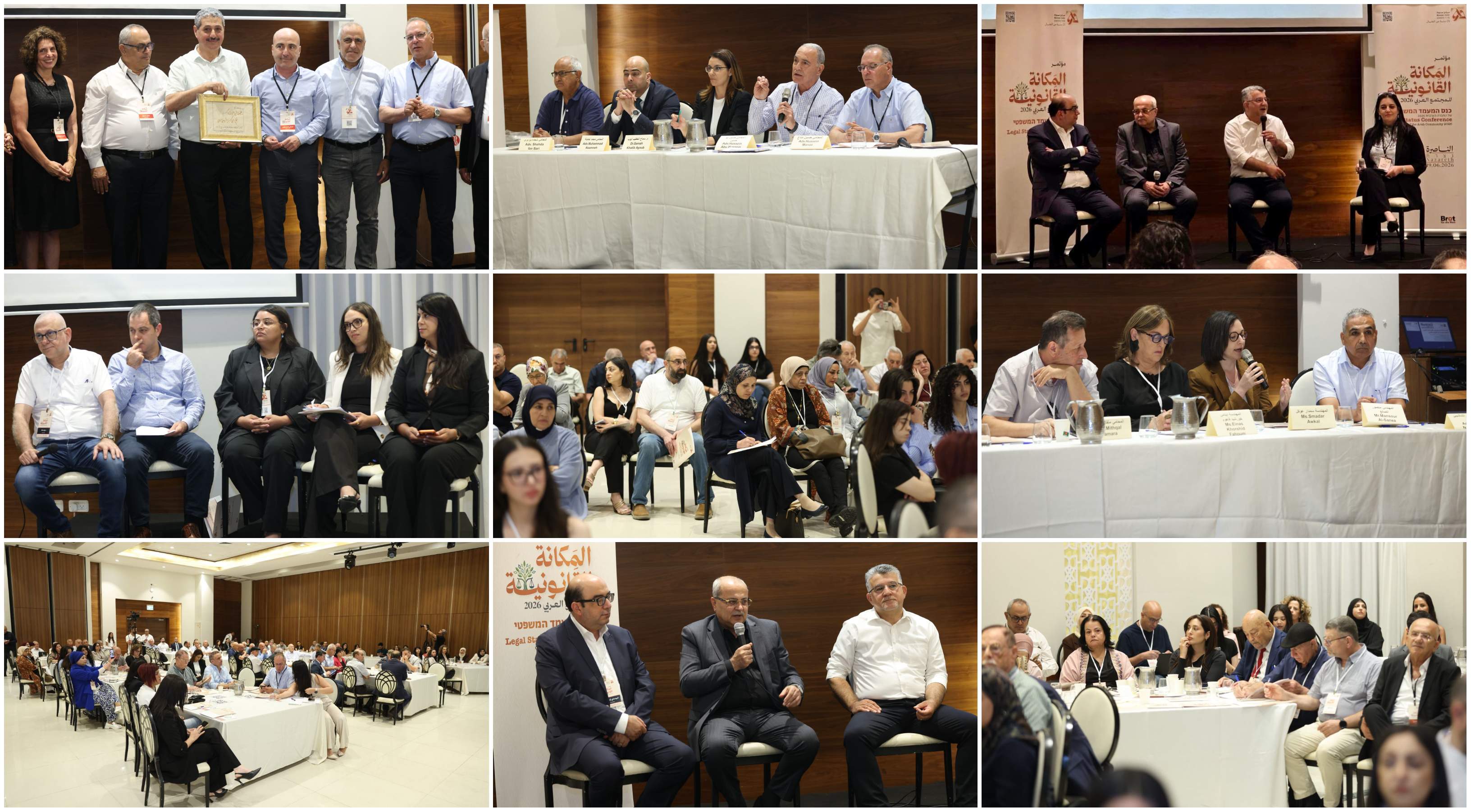
Nazareth, 19 June 2026 – Legal experts, academics, civil society leaders, planning professionals, and elected officials gathered in Nazareth on Friday for a conference marking the 25th anniversary of the Mossawa Center.
Participants warned of a continuing deterioration in the legal, civil, and political status of Arab citizens in Israel, citing shrinking civic space, growing restrictions on fundamental rights and freedoms, the deepening housing and planning crisis and home demolitions, escalating violence and organized crime, and declining Arab representation in national decision-making institutions.
The conference was structured around four principal themes: the judiciary and the rights of Arab citizens, violence and organized crime, land and planning policies, and the political participation of Arab citizens ahead of the 2026 Knesset elections.
The session on rights, civil liberties, and the judiciary system featured Attorney Mohammad Na'amneh, Chair of the Northern District of the Israel Bar Association and member of the Judicial Selection Committee, Attorney Shahda Bin Barri, Dr. Samah Al-Khatib Ayyoub, Attorney Hussein Abu Hussein, and Attorney Hussein Mana’a. Speakers discussed the role of the courts, the importance of judicial independence, and the implications of recent legislation and government policies for the rights of Arab citizens. Several participants argued that restrictions on freedom of expression and on the civic and political participation of Arab citizens have intensified in recent years, particularly since the events of 7th of October.
A second panel addressed the growing crisis of violence and organized crime in Arab society. Participants included Dr. Walid Haddad, Majdi Abu Al-Houf, Attorney Sirin Abu Laban, journalist Rimah Mufid, and Attorney Nariman Shehadeh Zoabi. Panelists described organized crime as one of the most significant threats facing Arab society and called for a comprehensive government response combining effective law enforcement with sustained investment in education, social welfare, youth, and community development. Participants also expressed concern over what they described as unequal enforcement practices and significant disparities between the state's response to crime in Arab communities and its response in other parts of the country.
The panel on land, planning, and housing included engineer Mansour Al-Sana, engineer Inas Khourshid Fahoum, Attorney Mithqal Samara, engineer Smadar Okel, Attorney Sameh Iraqi, and Attorney Shaker Balaoum. Discussions focused on the shortage of land available for development, the housing crisis in Arab localities, demolition and enforcement policies, and the underrepresentation of Arab citizens in planning and land authorities. Participants warned that the absence of long-term planning policies continues to exacerbate social and economic disparities across Arab communities.
Marking the Mossawa Center's 25th anniversary, Director and Founder Jafar Farah presented an overview of the organization's work over the past quarter century. He noted that since the outbreak of the war, the Center has provided legal assistance and professional support to hundreds of Arab employees who faced dismissal, suspension, or other adverse employment measures. Dr. Jamal Zahalka, Chair of the High Follow-Up Committee for Arab Citizens of Israel, addressed the challenges facing the Arab community and called for continued efforts to advance full civic equality. During the event, Mohammad Barakeh and Jafar Farah received recognition for their longstanding public service and contribution to advancing the rights of Arab citizens.
The concluding session examined the 2026 Knesset elections and the future of Arab political representation. Participants included Dr. Yousef Jabareen, Member of Knesset Ahmad Tibi, and Sami Abu Shehadeh, with speaker Suha Salman-Mousa, Executive Director of Mossawa Center. Speakers stressed that voter turnout within the Arab community will play a decisive role in determining its political influence in the coming years. They also discussed the possibility of establishing a broad joint Arab electoral list, describing political unity as a strategic priority in light of the growing political and social challenges facing Arab citizens.
The conference concluded with a series of recommendations, including safeguarding judicial independence and freedom of expression, opposing legislation that restricts civil rights under security justifications, expanding Arab representation in planning and land institutions, advancing long-term solutions to the housing and planning crisis, strengthening efforts to combat organized crime and illegal firearms, integrating families affected by violence and community leaders into prevention and response strategies, addressing anti-Arab incitement in digital spaces, increasing voter participation in the upcoming elections, and promoting the establishment of a broad, unified Arab political framework capable of strengthening the political influence of Arab citizens.
The conference concluded with a shared assessment that the status of Arab citizens in Israel can no longer be viewed solely through the lens of legal rights. Participants emphasized that it has become a broader civic, social, and political challenge requiring coordinated action by political leadership, local authorities, legal institutions, and civil society organizations.
